Insights
The Future of Work: AI Agents and Microsoft Copilot for Smarter Collaboration
Introduction
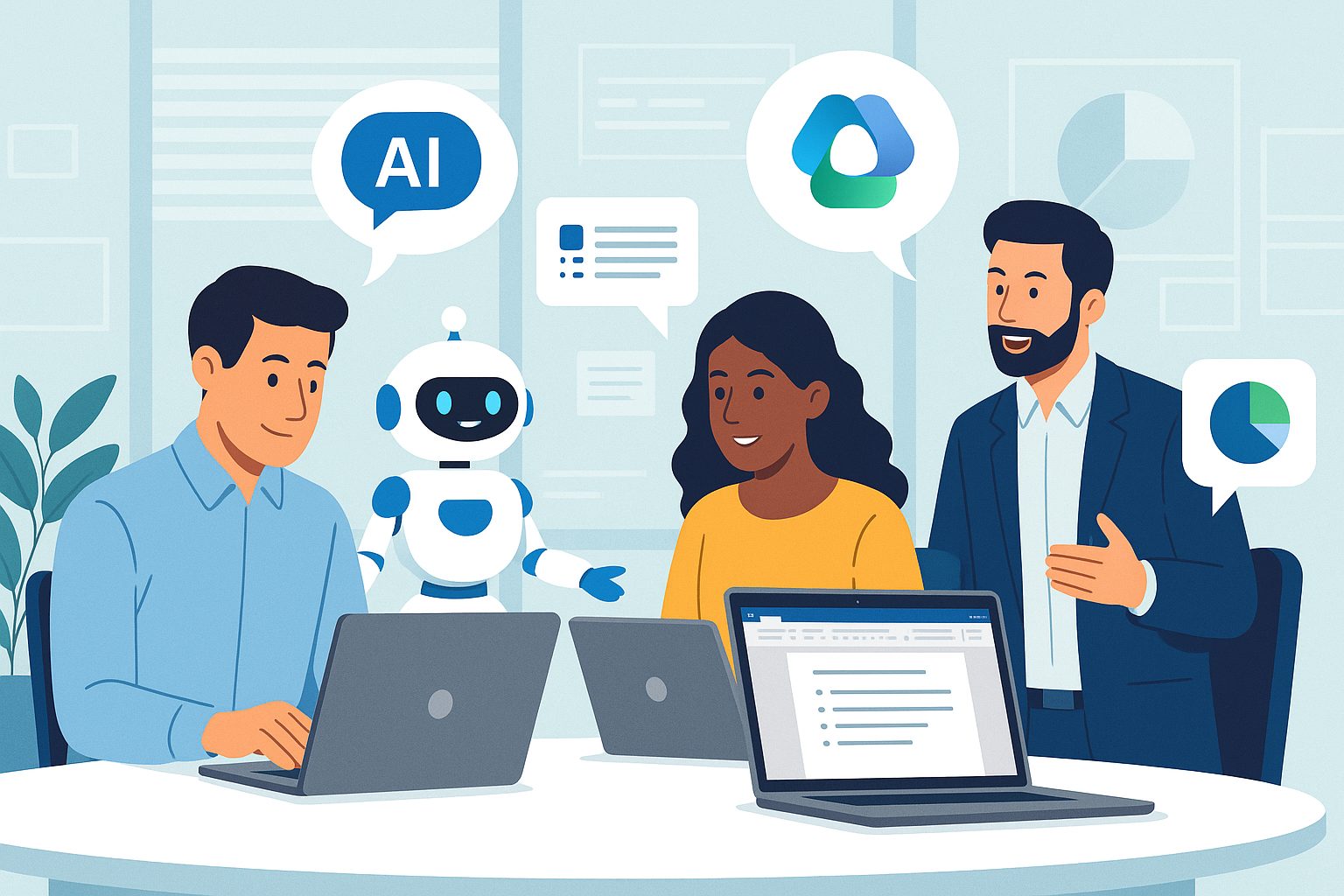
The future of work is no longer a distant concept. It’s here, unfolding before our eyes. Businesses worldwide are embracing artificial intelligence (AI) not just as a tool, but as a strategic partner in daily operations. From automating repetitive tasks to enabling smarter decision-making, AI agents and platforms like Microsoft Copilot are redefining how teams collaborate, innovate, and deliver results.
So what does this mean for you? Organizations cannot afford to rely on traditional methods. Efficiency, speed, and innovation are the name of the game, and ignoring AI could mean your business gets left behind. To gain a competitive edge, implementing AI-powered collaboration tools will ensure that your employees can focus on high-value tasks, while intelligent systems handle the mundane and transactional activities, freeing up their time to provide you with key actionable insights.
This blog explores how AI agents and Microsoft Copilot are shaping the future of work, their impact on productivity, and why businesses should invest in these technologies to remain competitive.
What Are AI Agents?
AI agents are intelligent digital systems designed to perform tasks on behalf of humans. Unlike basic automation, AI agents can learn, adapt, and make decisions based on context. They function across multiple domains and can handle many different functions. From responding to customer queries to scheduling meetings or even analyzing datasets, an AI agent can supercharge your employee’s productivity and transform the way you do business.
Key Features of AI Agents:
- Autonomy – They operate independently without constant human input.
- Adaptability – Capable of learning from interactions and improving outcomes.
- Context Awareness – Understand the environment and make informed choices.
- Collaboration – Work alongside humans, enhancing productivity rather than replacing jobs.
In the workplace, AI agents are becoming digital co-workers. They can streamline workflows to help boost efficiency and significantly reduce errors by minimizing manual tasks.
Microsoft Copilot: The Game-Changer in Productivity
Among the most impactful AI innovations in recent years is Microsoft Copilot, integrated into the Microsoft 365 ecosystem. Copilot is not just a chatbot—it’s a powerful AI assistant that leverages large language models (LLMs) and data from Microsoft Graph to provide contextual, intelligent support across Word, Excel, PowerPoint, Outlook, and Teams.
How Microsoft Copilot Transforms Work:
- In Microsoft Word: Drafts reports, proposals, and blogs with human-like fluency.
- In Excel: Analyzes large datasets, identifies patterns, and generates predictions.
- In PowerPoint: Creates professional presentations in minutes from a simple outline.
- In Outlook: Summarizes long email threads and suggests professional replies.
- In Teams: Transcribes meetings, generates action items, and provides real-time insights.
By integrating seamlessly with tools employees already use daily, Microsoft Copilot enables organizations to achieve smarter collaboration and faster execution of tasks.
The Synergy Between AI Agents and Microsoft Copilot
While AI agents can handle diverse operations, Microsoft Copilot focuses specifically on workplace productivity. Together, they create a collaborative ecosystem where:
- AI agents manage operational tasks like scheduling, data collection, and support tickets.
- Copilot enhances knowledge work, helping employees write, analyze, and present information.
This combination ensures businesses achieve operational efficiency while enabling employees to work more strategically.
Benefits of AI Agents and Microsoft Copilot in the Workplace
1. Boosted Productivity
Employees spend hours on repetitive tasks like drafting emails, generating reports, and consolidating meeting notes. Microsoft Copilot automates these tasks, allowing teams to focus on core business objectives.
2. Smarter Decision-Making
With AI analyzing vast amounts of data in real-time, businesses gain actionable insights faster. Copilot, for instance, can summarize financial trends in Excel or highlight risks in project updates.
3. Enhanced Collaboration
Remote and hybrid work models often create communication gaps. Tools like Copilot in Microsoft Teams ensure everyone stays aligned by generating meeting recaps and follow-up actions.
4. Cost Efficiency
AI-driven automation reduces manual errors, improves task turnaround time, and minimizes dependency on large administrative teams helping organizations save costs in the long run.
5. Employee Empowerment
Far from replacing jobs, AI agents empower employees by removing repetitive burdens, enabling them to focus on creativity, problem-solving, and innovation.
Real-World Use Cases
1. Sales and Marketing
- AI agents automate lead generation and follow-ups.
- Microsoft Copilot drafts personalized client proposals and prepares data-driven presentations.
2. Human Resources
- AI agents handle employee queries through chatbots.
- Copilot assists HR teams in creating performance reports and training materials.
3. Finance and Operations
- AI agents reconcile invoices and flag anomalies.
- Copilot identifies trends in Excel to support financial forecasting.
4. Customer Service
- AI agents provide 24/7 support through chatbots.
- Copilot summarizes customer feedback to help improve services.
Why Businesses Should Invest Now
The shift towards AI-driven collaboration is not optional. It’s becoming the industry standard. Competitors adopting Microsoft Copilot and AI agents will gain significant advantages in efficiency, cost savings, and innovation.
Businesses that delay risk falling behind in:
- Productivity benchmarks
- Employee satisfaction
- Customer experience
- Digital competitiveness
By investing early, organizations not only future-proof their operations but also position themselves as industry leaders in adopting innovative workplace technologies.
Challenges and Considerations
While the benefits are immense, organizations must address key considerations before scaling AI adoption:
- Data Security and Compliance – Ensuring sensitive data handled by AI agents remains protected.
- Change Management – Employees may fear job loss; businesses must communicate AI as a tool for empowerment.
- Training and Adoption – Teams need training to maximize the potential of Microsoft Copilot.
- Cost of Implementation – Although cost-saving in the long run, initial investment may be significant.
By tackling these challenges with the right strategy, businesses can unlock the full potential of AI-powered collaboration.
The Future Outlook
The next five years will witness exponential growth in AI-powered workplaces. With advancements in natural language processing (NLP) and generative AI, AI agents will evolve from task executors to strategic advisors.
- Predictive Collaboration: Tools like Copilot will anticipate needs and suggest next steps, optimizing and streamlining workflows.
- Cross-Platform Integration: AI agents will work across platforms, ensuring smooth collaboration between different business tools.
- Personalized Employee Experience: Employees will have personalized AI assistants tailored to their roles and work styles.
- Continuous Learning: AI will continuously adapt to organizational goals, making businesses more agile and resilient.
The future of work is a partnership between humans and AI where technology enhances human creativity and decision-making rather than replacing it.
Conclusion
The rise of AI agents and Microsoft Copilot signals a paradigm shift in workplace collaboration. Businesses that leverage these tools today will unlock unmatched productivity, leading to smarter decision-making and improved employee satisfaction.
By integrating AI-powered collaboration tools, organizations prepare themselves for a future where work is not just faster but also smarter.