Insights
How AI Agents Reduce Manual Workload in Dynamics 365: Real-World ROI Examples
At congruentX, we believe that the true value of technology is measured not by its complexity, but by its ability to expand human potential. And at this pivotal moment in business technology, we are moving beyond simple automation (where we tell software exactly what to do) into the era of AI Agents, where we empower intelligent systems to reason, act, and drive outcomes on our behalf.
For organizations leveraging the Microsoft Cloud, this is not science fiction. It is the new standard of operational excellence.
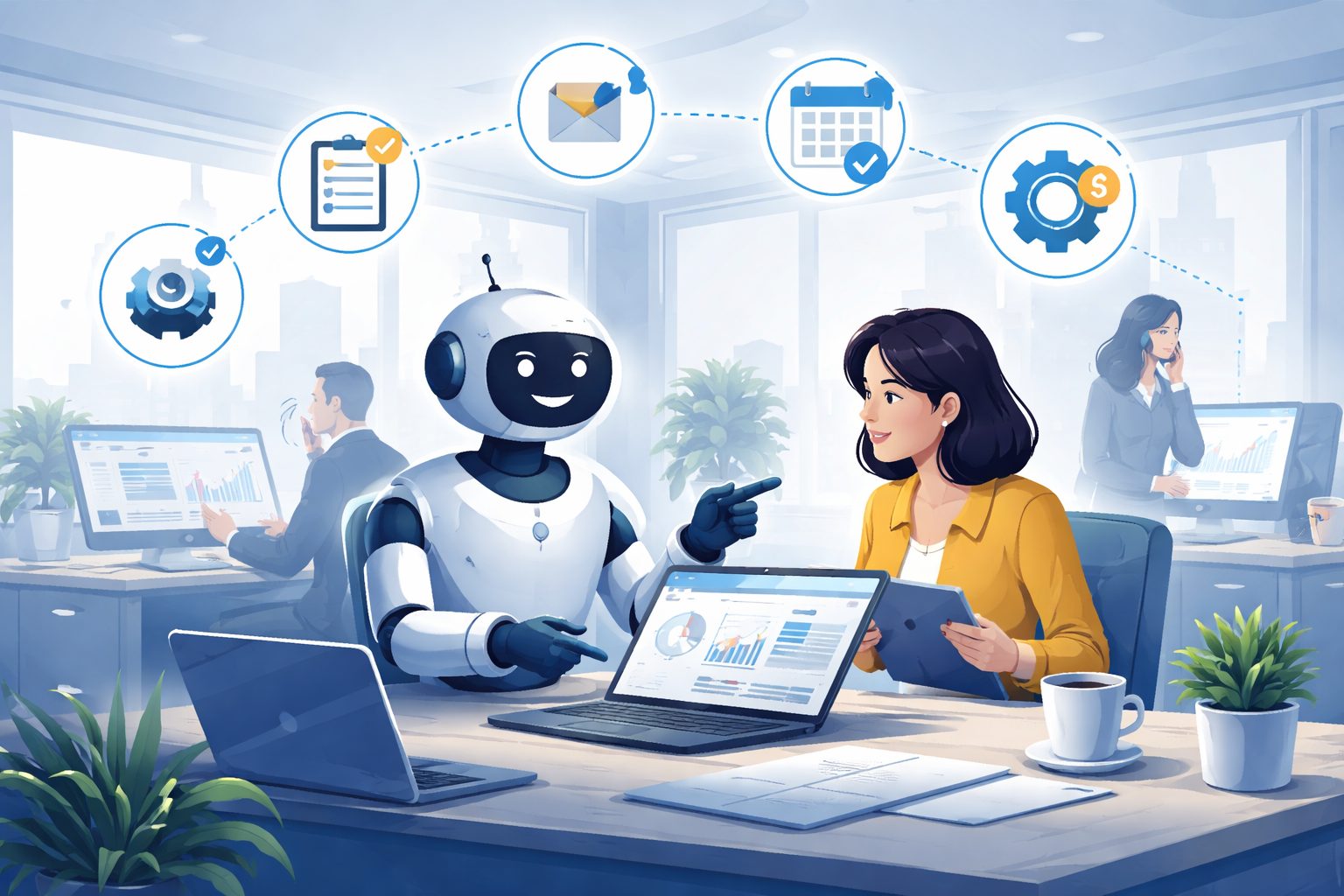
The introduction of AI Agents within Dynamics 365 represents a fundamental shift. It is about reclaiming time, the most finite resource your team possesses. By offloading the manual, repetitive tasks that clog our workflows, AI Agents allow your people to focus on what matters most: innovation, strategy, and deepening client relationships.
This blog explores how AI Agents reduce manual work in Dynamics 365, along with realistic ROI scenarios, common use cases, and best practices for successful adoption.
What Are AI Agents in Dynamics 365?
AI Agents in Dynamics 365 are intelligent systems designed to automate repetitive tasks, analyze data, and make informed decisions with minimal human intervention. Unlike traditional automations, AI Agents:
- Learn from patterns and interactions
- Work across multiple systems
- Trigger workflows automatically
- Make predictive recommendations
- Communicate with customers and team members
They enhance the capabilities of Copilot, Dynamics 365 Customer Service, Dynamics 365 Sales, Dynamics 365 Finance, and more, making entire departments more efficient. More efficiency means better productivity. And better productivity leads to ROI. Think of them not just as software, but as the newest, most efficient members of your team, ones that never sleep and never make data entry errors.
The Manual Workload Problem (and Why AI is the Solution)
Employees spend hours each week on repetitive, low-value tasks such as:
- Entering customer data
- Updating CRM fields
- Drafting emails
- Managing service tickets
- Creating reports
- Qualifying leads
- Reconciling invoices
These tasks are essential but time-consuming, where employees get stuck “doing CRM” instead of more value-added tasks. This prevents teams from focusing on strategic activities that generate revenue, improve customer satisfaction, or strengthen operations.
AI Agents step in by handling these manual workflows automatically, consistently, and accurately — 24/7.
Consider these typical real-world scenarios listed below and see how leveraging AI Agents drives meaningful change and delivers tangible ROI:
1. Transforming Sales: From Data Entry to Relationship Building
The Challenge: Sales professionals often spend a disproportionate amount of time on administrative tasks—updating CRM records, drafting follow-up emails, and researching prospect data. This is “dead time” where no revenue is generated.
The AI Agent Solution: Imagine an autonomous agent within Dynamics 365 Sales. Instead of a rep manually entering data after a call, the Agent analyzes the transcript, automatically updates the opportunity record, flags action items, and drafts a personalized follow-up email based on the context of the conversation.
The ROI:
- Operational Excellence: Reduction in administrative time by up to 40%.
- Business Outcome: Sales teams can increase their client-facing time, leading to shorter sales cycles and higher conversion rates. You are empowering sellers to sell, rather than manage data.
2. Revolutionizing Customer Service: The Proactive Partner
The Challenge: High call volumes and complex case routing often lead to bottlenecks. Human agents spend valuable minutes triaging issues rather than solving them, leading to employee burnout and customer frustration.
The AI Agent Solution: In Dynamics 365 Customer Service, AI Agents act as the first line of defense. They don’t just answer FAQs; they can autonomously troubleshoot, process returns based on policy, and route complex issues to the exact right human expert, complete with a summary of the problem and suggested solutions.
The ROI:
- Client Success: A significant decrease in average handling time (AHT) and an increase in first-contact resolution.
- Meaningful Change: Your human agents are relieved of the drudgery of triage, allowing them to handle sensitive issues with empathy and care.
3. Optimizing Supply Chain: Predictive Action
The Challenge: Supply chain disruptions are often addressed reactively. By the time a human spots a potential inventory shortage, the delay is already inevitable.
The AI Agent Solution: AI Agents within Dynamics 365 Supply Chain Management monitor global trends, weather patterns, and vendor performance data 24/7. When a risk is identified, the Agent doesn’t just send an alert; it can autonomously propose alternative suppliers and draft purchase orders for review, effectively mitigating the risk before it impacts the customer.
The ROI:
- Strategic Advantage: drastic reduction in downtime and stockouts.
- Partnership: You become a more reliable partner to your customers because your backend operations are resilient and self-correcting.
How AI Agents Reduce Manual Workload in Dynamics 365
While the scenarios above illustrate the strategic impact, it is helpful to look at the specific tactical capabilities driving these results. Here is a comprehensive list of the manual workloads AI Agents can handle across your business:
1. Automated Data Entry and Record Updates
To drive meaningful change, we must first free your team from the administrative friction that slows them down.
Data entry is one of the biggest bottlenecks in CRM processes. AI Agents instantly capture:
- Meeting notes
- Emails
- Call summaries
- Customer interactions
They automatically convert these into CRM fields, tasks, and follow-ups. This eliminates hours of manual typing and reduces human error.
Impact: Sellers and service agents in the US market save significant time each week, improving both speed and accuracy of customer interactions.
2. Intelligent Lead Qualification
We believe in empowering your sales force to build partnerships rather than chasing cold data, allowing them to focus their energy where it matters most.
Sales teams often lose valuable time determining which leads to pursue. AI Agents:
- Score leads based on behavior
- Analyze past buying patterns
- Recommend next best actions
- Draft personalized outreach
- Assign leads automatically to the right rep
This dramatically reduces the salesperson’s manual workload while increasing conversion rates.
3. Customer Service Case Automation
By integrating AI Agents into your support workflows, we empower your team to shift focus from simply managing ticket volume to delivering immediate, personalized value.
In support environments, AI Agents can:
- Identify customer issues
- Auto-create cases
- Suggest or generate responses
- Route tickets to the right department
- Close low-complexity cases autonomously
This reduces ticket backlog, improves response times, and boosts customer satisfaction.
4. Workflow Automation Across Departments
True operational excellence requires breaking down organizational silos to ensure that value flows seamlessly across your entire enterprise.
AI Agents automate cross-team workflows such as:
- Invoice matching in Finance
- Inventory reconciliation in Supply Chain
- Document creation in HR
- Contract review in Legal
These tasks normally require constant attention and manual verification. Now they happen automatically.
5. Automated Insights and Reporting
We believe that the true power of data lies in the strategic decisions it enables, rather than the manual effort required to assemble it.
Reporting is another heavily manual process. AI Agents automatically:
- Compile weekly and monthly dashboards
- Identify performance gaps
- Flag anomalies
- Summarize trends
This frees analysts from routine reporting work so they can focus on strategic planning.
Real-World ROI Examples for US Organizations
While the potential of AI inspires excitement, we believe in grounding that vision in reality. It is not enough to simply adopt new tools; we must leverage them to drive meaningful change and operational excellence across your entire organization. To illustrate the true power of this technology, we have outlined four real-world scenarios that demonstrate exactly how AI Agents within the Microsoft Cloud are delivering significant Return on Investment and empowering businesses to achieve more.
Example 1: Retailer Saves $150k Annually via Automation
A mid-sized US retail company uses AI Agents in Dynamics 365 Customer Service to automate ticket categorization and initial responses. By offloading 40% of Tier-1 queries to AI:
- Agents saved nearly 60 hours per week
- Average response time improved by 35%
- Annual labor savings exceeded $150,000
Example 2: Sales Cycle Reduced by 12% in 30 Days
A B2B company deployed AI Agents in Dynamics 365 Sales to handle lead scoring and email drafting. In just 30 days:
- Sellers saved 5–7 hours/week
- Opportunity updates became 2x faster
- Sales cycle duration dropped by 12%
This resulted in both higher seller satisfaction and stronger pipeline growth.
Example 3: Manufacturer Saves Over $200,000 and Cuts Processing to 6 Hours
A US manufacturing business used AI-driven automation to match invoices, flag exceptions, and reconcile vendor statements. Results included:
- 70% reduction in manual reconciliation
- Processing time decreased from 3 days to 6 hours
- Annual cost savings exceeded $200,000
Example 4: Marketing Team Reclaims 10 Hours Per Week for Strategy
AI Agents automatically generate campaign performance summaries, saving marketers from manually analyzing multiple data sources.
- 8–10 hours per week saved on reporting
- More time reallocated to strategy and creative development
Calculating ROI for AI Agents in Dynamics 365
Calculating the return on investment for AI Agents shouldn’t be a guessing game; it requires a structured approach to validate how your technology investment translates into ROI. Below, we outline a four-step framework designed to empower you to quantify this value, followed by a concrete example of what this looks like in practice.
You can estimate your ROI using a simple formula:
Step 1: Identify manual tasks
For example: “Service reps spend 3 hours/day on case updates.”
Step 2: Estimate automation potential
AI Agents typically reduce manual workload by 30–50%.
Step 3: Multiply by employee hourly cost
Include salaries + overhead.
Step 4: Subtract technology costs
Dynamics 365 and Copilot licensing + implementation.
Example:
If a 15-person team saves 6 hours/week each:
- 6 × 15 = 90 hours saved/week
- At $50/hour = $4,500/week
- Annual savings = $234,000
The velocity at which these solutions deliver value is a game-changer, with ROI often achieved in just 1–3 months. This rapid return empowers us to validate success quickly, ensuring that your investment drives immediate, meaningful change for your business.
Best Practices to Maximize ROI
To ensure your journey to AI adoption drives meaningful change and sustainable growth, we recommend following these proven best practices.
1. Start with One High-Volume Process
We recommend beginning your journey by targeting a single, high-impact area ripe for automation. Focus on repetitive, time-consuming tasks such as:
- Ticket triage
- Lead scoring
- Data entry automation
By focusing on a quick win, you establish a foundation of success that empowers your team to tackle more complex challenges later.
2. Measure Before and After
You cannot manage what you do not measure, so establishing a baseline is critical for validating success. We advise tracking key performance indicators including:
- Task completion time
- Error rates
- Employee hours saved
- Customer satisfaction
Demonstrating these tangible wins with hard data is essential for building confidence and securing buy-in for future innovation.
3. Provide Clear Instructions to AI Agents
Just as you would onboard a new employee, you must define clear parameters and objectives for your digital workforce. AI Agents operate best with well-defined guardrails. Establishing these specific protocols ensures that your AI partners operate with the precision and reliability your business demands.
4. Blend Human + AI Workflows
The goal is to augment human potential, not replace it, by creating a symbiotic relationship between your people and technology. Use AI for routine, transactional tasks and reserve your human talent for complex, empathetic decisions. This approach ensures your team can focus on high-value strategy while the Microsoft Cloud handles the manual workload.
5. Train Employees
Our unwavering commitment to success starts with empowering your internal teams to embrace these new tools. US teams adopting AI Agents benefit from:
- Short learning sessions
- Clear documentation
- Hands-on demos
This ensures high adoption and trust. When your people feel confident and supported, adoption rates soar, driving true digital transformation across the enterprise.
By adhering to these principles, you ensure that your investment delivers lasting value rather than a temporary fix. It is about building a sustainable path toward a future defined by efficiency, partnership, and growth.
Common Use Cases Across US Industries
From the high-velocity demands of retail to the critical operations of healthcare, organizations are leveraging these intelligent tools to solve their industry’s specific challenges, unlocking new opportunities for growth.
Retail
- Automated returns processing
- Customer query resolution
- Personalized product recommendations
Healthcare
- Patient inquiry handling
- Document summarization
- Appointment follow-ups
Manufacturing
- Inventory reconciliation
- Supplier communications
- Order status updates
Financial Services
- Fraud detection support
- Customer verification
- Claims processing
Across these diverse sectors, the result is the same: manual friction is removed, allowing teams to focus on high-value initiatives. By adopting these industry-specific use cases, businesses are setting the standard for what modern efficiency looks like.
A 30-60-90 Day AI Agent Deployment Plan for US Companies
Drawing from our extensive experience in AI Agent deployment, we have found that the most successful transformations follow a structured, phased approach. We typically guide our partners through this 90-day roadmap to ensure that we not only deploy technology but also drive adoption and measurable operational excellence.
First 30 Days
We believe in starting with precision, identifying the specific friction points where innovation can make the most immediate impact.
- Identify the process with biggest manual workload
- Set clear KPIs
- Launch a small pilot
Days 31–60
Once the initial pilot is live, our focus shifts to rigorous measurement and refining the workflow to ensure it meets our unwavering commitment to quality.
- Measure impact
- Optimize workflows
- Expand to adjacent tasks
Days 61–90
With a proven model in place, we empower you to scale these capabilities across the enterprise, ensuring long-term sustainability and governance.
- Scale adoption company-wide
- Integrate AI governance
- Document ROI for leadership
By following this proven schedule, we move beyond theoretical benefits to deliver meaningful change within a single quarter. This roadmap ensures that your journey to AI adoption is deliberate, scalable, and ultimately, a driver of significant business growth.
Turning Innovation into Impact: Your Partner for the Future
We began this discussion with a focus on liberating human potential—moving from simple automation to a world where AI agents in Dynamics 365 empower your people to achieve more. By removing manual tasks, improving accuracy, and accelerating workflows, AI Agents empower teams to focus on strategic and revenue-driving activities. The ROI is undeniable with faster service, higher productivity, lower operational costs, and more informed decision-making.
That is the promise of the Microsoft Cloud, but realizing that promise requires more than just software; it requires a partner who understands the intersection of people, process, and technology.
At congruentX, our mission is to help you Get CRM Right. We reject the traditional consulting model that prioritizes billable hours over business results. Our philosophy is built on outcomes not hours, and clients not projects. We don’t just deploy AI Agents; we align them with how your teams actually work, ensuring that “digital transformation” translates into tangible revenue growth and operational excellence.
You don’t have to navigate this shift alone. Let’s build a partnership that turns this vision into your competitive advantage.
- Ready to start? Contact us today to discuss how we can help you drive meaningful change.
- Want to see the future in action? Sign up for an upcoming webinar or view our past events at resources.congruentx.com/events.
Frequently Asked Questions (FAQ)
1. What are AI Agents in Dynamics 365?
AI Agents in Dynamics 365 are intelligent, automated systems that perform tasks such as data entry, case management, lead scoring, and reporting. They reduce manual workload by making decisions, initiating workflows, and generating insights without constant human intervention.
2. How do AI Agents improve productivity for US businesses?
AI Agents eliminate repetitive tasks like data entry, email drafting, ticket routing, and record updates. This frees employees to focus on strategic and revenue-generating activities, improving overall productivity and efficiency across sales, service, finance, and operations.
If you are ready to empower your workforce and drive operational excellence, contact us to discuss how we can help you reclaim your team’s valuable time.
3. Do AI Agents work across all Dynamics 365 apps?
Yes. AI Agents integrate seamlessly with multiple Dynamics 365 modules, including Sales, Customer Service, Finance, Supply Chain, Marketing, and Power Platform. They can also interact with Microsoft 365 apps like Outlook and Teams for cross-department automation.
4. How quickly can a business see ROI from AI Agents?
Most businesses begin seeing ROI within 30–90 days. Since AI Agents reduce manual workload by 30–50% in many processes, time savings translate quickly into lower operational costs and faster task completion.
To map out your specific path to value, we invite you to join our AI Fueled Copilot Envisioning Lab, where we work with you to identify high-impact opportunities that improve your ROI.
5. Do AI Agents replace employees?
No. They support employees by handling repetitive, low-value work. Human teams still make strategic decisions, manage complex cases, and provide personal interaction. AI Agents augment human productivity — they don’t replace it.
6. Is it difficult to implement AI Agents in Dynamics 365?
Implementation is straightforward, especially when starting with one workflow or department. Most organizations begin with small pilot programs, measure results, then scale across the business. Microsoft provides built-in tools and templates to simplify deployment.
Our philosophy is that you shouldn’t just implement technology, you should adopt a strategy—contact us today to ensure your deployment drives meaningful change from day one.
7. Are AI Agents secure for sensitive business data?
Yes. AI Agents follow Microsoft’s enterprise-grade security, compliance, and governance standards. Access is role-based, actions are logged, and data is processed within secure environments, making them safe for industries like finance, healthcare, and government.