
Insights
Common Pitfalls in CRM Implementations and How to Avoid Them
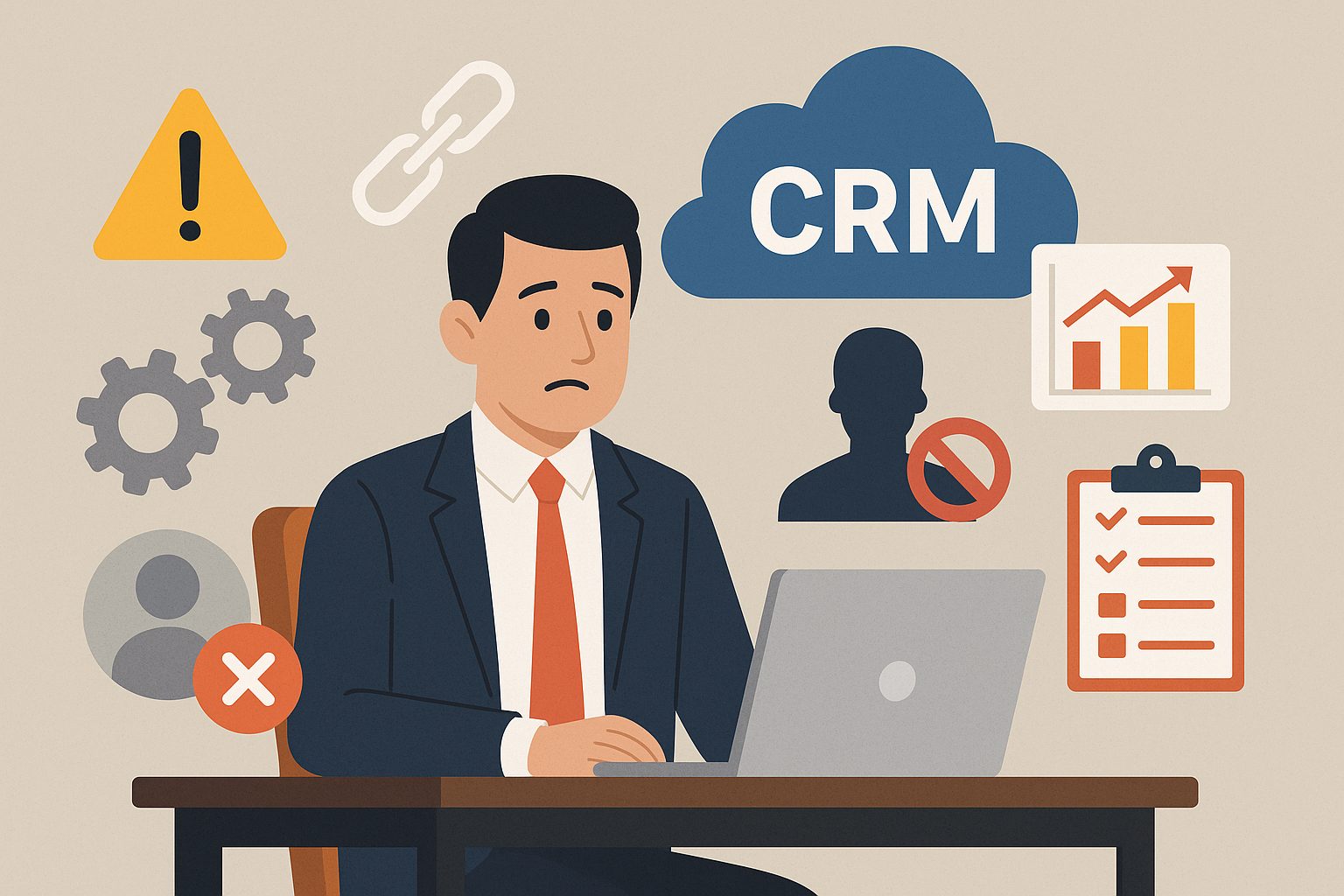
Implementing a Customer Relationship Management (CRM) system can significantly enhance how your business manages customer interactions, sales pipelines, and marketing campaigns. However, without proper planning and execution, CRM implementation can go wrong—leading to wasted investments, frustrated teams, and lost opportunities.
In this blog, we’ll explore the common pitfalls in CRM implementations and provide actionable insights on how to avoid them. Whether you’re a small business or an enterprise in the USA, this guide will help you make your CRM implementation a success.
1. Lack of Clear Business Objectives
One of the biggest mistakes companies make is diving into CRM software implementation without clearly defined goals.
Pitfall:
Businesses often implement CRMs just to “have one” without understanding how it supports their sales, marketing, or support functions.
Solution:
Define your business objectives before selecting or implementing a CRM. Do you want to improve lead management, customer support, or sales forecasting? Choosing a CRM solution in the USA that aligns with your business goals is essential.
2. Choosing the Wrong CRM Platform
Not all CRMs are created equal. Picking the wrong platform can lead to integration issues, poor user experience, and unscalable systems.
Pitfall:
Selecting a CRM based on popularity rather than suitability for your business needs.
Solution:
Assess different CRM systems in the USA based on scalability, features, customization options, and integration capabilities with your existing tools. Consider top-rated platforms that offer cloud-based CRM solutions for flexibility and mobility.
3. Inadequate User Training
Even the best CRM is useless if your team doesn’t know how to use it effectively.
Pitfall:
Employees resist using the new CRM because they find it confusing or believe it adds extra work.
Solution:
Invest in comprehensive training and onboarding sessions. Create user-friendly documentation and ensure ongoing support. Encourage adoption by showing how the CRM system can make their jobs easier.
4. Poor Data Quality
Your CRM is only as good as the data you feed into it.
Pitfall:
Importing outdated, duplicate, or inaccurate data into your new CRM.
Solution:
Before migration, audit your existing customer data. Clean, deduplicate, and validate the data to ensure a smooth transition. Good data hygiene practices lead to better outcomes in CRM automation and analytics.
5. Ignoring Integration Needs
A CRM platform that doesn’t integrate with your existing software stack can create more problems than it solves.
Pitfall:
Disjointed tools leading to manual data entry and inconsistent records.
Solution:
Choose a CRM that integrates seamlessly with your marketing automation, ERP, accounting, and communication tools. Many CRM providers in the USA offer APIs and built-in integrations for a unified experience.
6. Over-Customization
While customization is important, going overboard can lead to a clunky, unmanageable system.
Pitfall:
Customizing every feature leads to complexity and high maintenance.
Solution:
Stick to essential customizations aligned with your business processes. Choose a flexible CRM software that allows configuration without extensive development.
7. Lack of Executive Buy-In
A successful CRM implementation needs strong support from leadership.
Pitfall:
No executive sponsorship results in limited adoption and budget constraints.
Solution:
Involve key decision-makers early in the planning process. Show the long-term ROI of investing in CRM tools to gain leadership support and budget.
8. Failing to Monitor and Optimize
CRM implementation is not a one-time task. Continuous evaluation is critical for long-term success.
Pitfall:
Not tracking user engagement or business KPIs post-implementation.
Solution:
Regularly review your CRM performance using analytics dashboards. Optimize workflows, update integrations, and gather feedback from users to improve the system.
Final Thoughts
Avoiding these common pitfalls can save your business time, money, and headaches. A well-executed CRM implementation in the USA can improve customer relationships, boost productivity, and drive revenue.
Whether you’re a growing startup or an established business, choosing the best CRM system in the USA and implementing it correctly is a strategic move toward success.
Ready to Implement a CRM?
If you’re looking for expert advice on CRM tools, platform selection, or professional CRM setup services in the USA, we’re here to help. Reach out today to streamline your sales and customer engagement process with the right CRM solution.